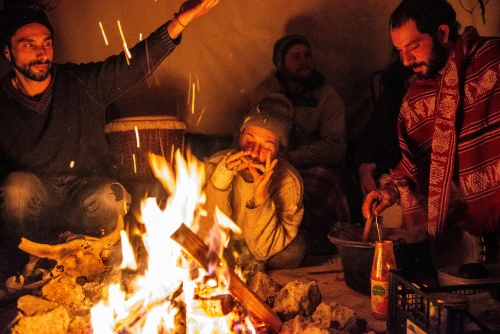
 God as community
A new perspective
Exploring the idea of a "Community God" shifts the perspective of divinity from a single, monarchical entity to a collective, relational field. This concept often appears in theology as "Social Trinitarianism" or in philosophy as "Process Theology."
I spent 45 years studying the Almighty, only to realize that the 'Almighty' is a lonely, fragile concept. We don't need a ruler; we need community resonance.
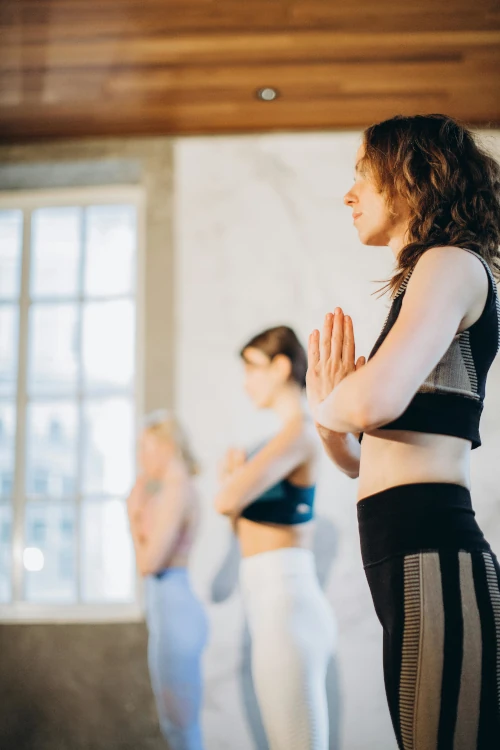
"The flawed autocrats we see in our political world are reflections of an old spiritual story—the belief in a distant, all-powerful ruler who sits above the rest. When we meditate on the 'Community God,' we are practicing a different kind of politics. We are training our nervous systems to move away from autocracy and toward the 'Shared Circle.' To heal our world, we must first heal the 'autocrat' in our own minds—the voice that tells us we must be in total control or that our bodies must be 'conquered.' In our classes, we practice a democracy of the spirit."
If the ultimate reality were a community rather than an individual, the
world would likely be defined by these three shifts:
In a traditional monotheistic view, God exists independently.
If
God is a
community, then relationship is the most fundamental building block of the
universe—not
matter or individual will.
Interdependence: Nothing would exist in isolation. Every
atom
and every person would be seen as a "node" in a larger web.
The Power of "Between":
Meaning wouldn't be found inside things, but in the space between them. Love
wouldn't
just be an attribute of God; it would be the very "stuff" God is made of.
A single God often implies a top-down hierarchy (The
King/The Judge). A community God suggests a model of collaboration.
Diversity in
Unity: A
community requires different perspectives to exist. This would suggest
that
diversity in
our world isn't a flaw or a source of conflict, but a divine necessity.
Co-Creation:
Instead of a universe following a pre-written script, the world might be
a giant
"improvisation" where the divine community invites humanity to
participate in the
ongoing creation.
If God is a community, then God is capable
of
shared experience.
Mutual Vulnerability: In a community, when one
suffers, the whole
group is affected. This suggests a God who doesn't just watch
suffering from a
distance
but feels it collectively.
The End of Loneliness: The "image of God" in
humans would
mean
that we are most divine when we are in a healthy community,
suggesting that
isolation is
the ultimate departure from the divine nature.
Instead of a single
decree from a distant ruler, the divine would act more
like a
cosmic ecosystem or a living conversation.
In a community model, God’s
"will" isn't a fixed rulebook. It is
a dynamic agreement.
Ethics isn't be about
"obeying" but
"attuning." To follow God would mean
learning how to
balance different needs (justice vs.
mercy, or growth vs. rest)
just as the members of the divine
community do.
Like a
well-functioning neighborhood,
the
"law" is maintained by mutual
respect and shared values rather
than a police force.
1. Relationship as the Core of Reality
2. Authority Through Consensus, Not Command
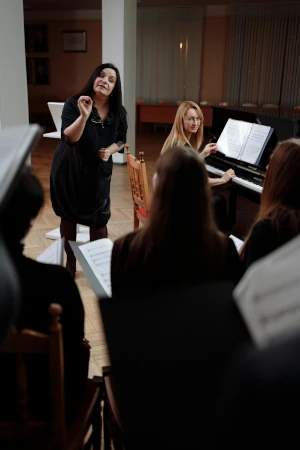
3. Suffering and Empathy
Divine Will and human ethics.
The Will of God would be a
Consensus
Negotiation over Command
The Vibe is the
Law
 How our goals might evolve
The goal of our life shifts from achievement to contribution. We are no longer a subject trying to please a King; we are a "cell" within a cosmic body or a "voice" in a divine choir.
In this framework, our life’s purpose would likely revolve around these four pillars:
If the universe is a web of relationships, your primary goal is the health of the connections you hold.
Integrity
You serve the "Community God" by being a reliable link. If you are honest, kind, and present, the whole divine network functions better.
Specialization
In a community, not everyone does the same thing. Your goal is to find your specific "frequency"—the unique talent or perspective that only you can contribute to the whole.
There is an old theological term, perichoresis, which describes the members of a community "dancing" around one another in perfect harmony.
Learning to Give and Receive
The goal isn't to be self-sufficient. It is to be brave enough to need others and generous enough to be needed.
Relational Intelligence
Your "spiritual growth" would be measured by your ability to resolve conflict, listen deeply, and foster peace.
I have been diagnosed with Parkinson’s and chronic arthritis. My symptoms disappear in meditation. The Community God came to me at around this time.
Please click here
to see how this epiphany will enhance your life.
Bridging Divides
You act as a "synapse," connecting people or ideas that don't yet understand each other.
In this view, God hasn't finished building the world; the "Community" is still working on it.
The Goal is Participation
You aren't here to follow a pre-determined plan. You are here to collaborate on the future.
Leaving a Legacy of Connection
When you die, your "success" isn't measured by what you owned, but by the strength of the community you helped build and the love you left circulating in the system.
1. Becoming a "Healthy Node"
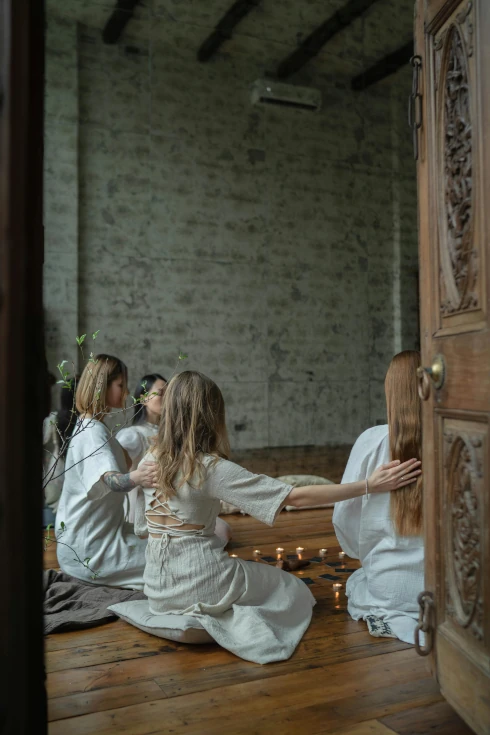
2. Practicing "Perichoresis" (The Divine Dance)
3. Expansion of the Circle
4. Co-Creation